


American Karma
Click here to jump to talk playlist and an audio clip
“The first consideration to make American karma workable, less speedy, is some kind of development of less aggression, less speed. That’s the beginning point.”
Chögyam Trungpa, Spiritual Materialism and American Karma seminar
What Karma It Is and What It Isn’t
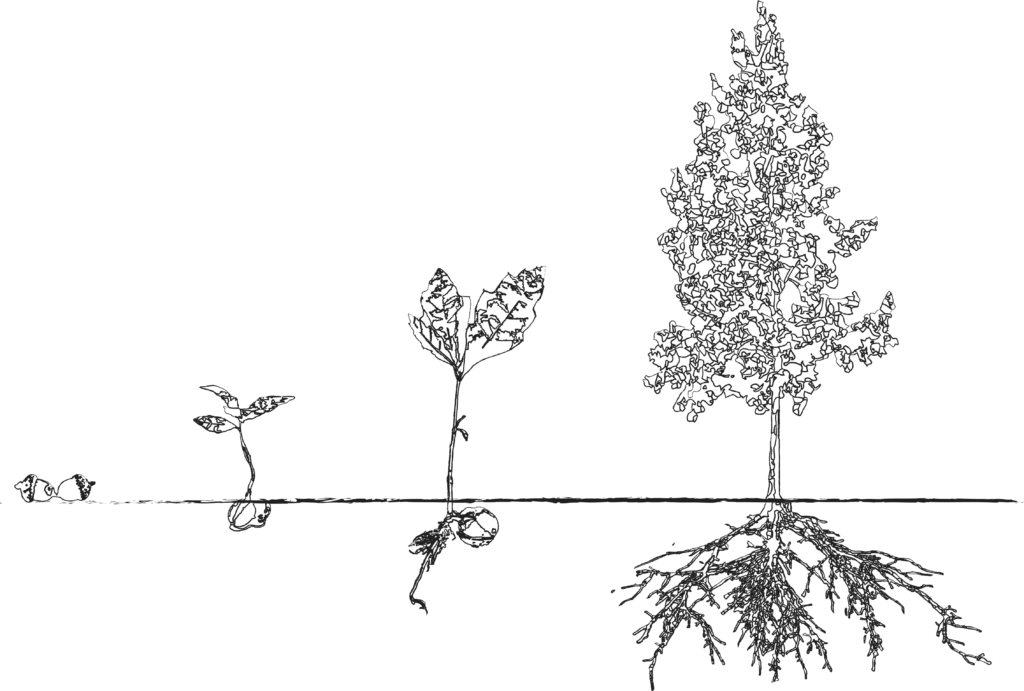
Karma is perhaps the most popular yet misunderstood Buddhist concept. Fully adopted by mainstream culture, the word karma is used everywhere—in gleeful pop songs, in donation thank-you emails (“Your karma is skyrocketing!”), and for expressing smug satisfaction when people who have wronged us experience misfortune. According to the Buddhist teachings, it is true that we occasionally experience the immediate karmic result of our negative (or positive) actions. For instance, you yell at someone in gridlock traffic and then slam your finger in the car door. However, your hurt finger is not cosmic justice, but the energy you put out into the world bouncing back on you. As Chögyam Trungpa says in his book on karma The Future Is Open, “It is quite predictable: since our world is created from passion, aggression, and ignorance, we get back from it what we have put in.” Propelled by our confusion, this chain-reaction process of action and result, or cause and effect, is what keeps us trapped in samsara and suffering.
Collective Karma
The experience of living in America, or any country in the world, is a result of collective karma, the karmic inheritance of a society. This shared karmic situation is not totally a result of our personal karma. We might be living in a particular environment, but within that, our personal karma complements the collective karma. For example, you could fall off a ladder while painting your house, choose not to go to the hospital because you’re worried about the bill, and later die of a brain bleed. The national karma is high healthcare costs and part of the personal karma is losing your balance. Chögyam Trungpa impressed on his American students that they had to acknowledge and relate to their national karma. Since collective karma is inescapable, our duty is to work with it through cultivating our sanity and extending compassion to others.
What Is American Karma?
Trungpa Rinpoche characterizes American karma as essentially the momentum of aggression (from the extremely subtle to violent aspects), territoriality, speediness, and spiritual materialism. Half a century after these teachings were given, the American karmic river still seems to be rushing in that direction. Instead of dismissing these teachings as dated or only applicable to America, we only have to look up to see aggression gaining ground. During a lecture, in response to a question about whether Buddhism would expand in the US, Rinpoche said, “I think so, because the communication system is getting more efficient and the neurosis is getting speedier.” A through line of these teachings is that there’s no bypassing our confusion on the Buddhist path; and in fact, it’s where we begin.
The Mixing of Buddhism and American Karma
Trungpa Rinpoche had a unique ability to see situations from a bird’s eye view, revealing what karmic causes and conditions were at play. In these teachings, he commented on the violent colonial history of America, the anti-materialist counterculture, the earlier reception of Hinduism and Zen Buddhism, the Chinese invasion of Tibet, psychedelic experimentation, the misunderstanding of tantric Buddhism, and the speedy capitalist culture. Chögyam Trungpa touches on these and other complex topics as a way to bring some awareness to why American karma was unfolding the way it was. His point was not to delve into historical research or our personal case history, but to acknowledge collective karma as a particular force we need to work with. Chögyam Trungpa clearly saw America’s potential for spiritual development, a karmic opening for Buddhism to be established. More than simply a counterculture open to new ideas, he appreciated the wisdom, honesty, and intensity of American culture which allowed Buddhism to flourish.
Spiritual Materialism

An element of the meeting of American culture and Buddhism was spiritual materialism. Chögyam Trungpa describes the phenomenon of using spirituality to bolster ego. He pointed out the fascination with the vivid, intricate art of Tibetan Buddhism, the alluring promise of sudden enlightenment, and the opportunistic use of spirituality to gain more credentials and become a better person. This mistaken approach directly contradicted the Buddhist path of renunciation, letting go of our sense of security and territoriality, and working for the benefit of others. He also noticed people searching for alternatives to Judeo-Christian religions, but unconsciously laying their theistic views on top of Eastern spirituality. While spiritual materialism is looking for an answer or savior to make us happy, Buddhism turns that logic around by giving up ground rather than solidifying it.
The Future Is Open
Trungpa Rinpoche’s teachings were often focused on the present and how to relate to the ordinary world. In his lectures, he rarely got into past lives and future rebirth as part of the karma conversation. Instead he put great emphasis on meditation practice as the essential foundation to working with karma. Trungpa Rinpoche describes meditation as an antidote for the aggression and speed of American karma and also as a means to awaken compassion (including towards oneself). He also prescribed the discipline of the path as opposed to chasing sudden enlightenment, as well as surrendering your ground by being open and bold. While it’s impossible to parse out the many causes and conditions that have led us to our current situation in life, we can change how we move forward. We can cultivate our basic sanity and act more out of our fundamental buddha nature rather than our neurosis. The future is open.
Karmic Playlist (Audio)
Tibetan Buddhism and American Karma (Boulder, CO, 1971.)
- Talk 1: Buddhism in America
- Talk 2: Karma
- Talk 3: Patience and Discipline
- Talk 4: Aggression
- Talk 5: Developing a Meditative Tradition
- Talk 6: Skillful Means and Wisdom
- Talk 7: Education
- Talk 8: Communities
- Talk 9: Cities
- Talk 10: Final Reflections on American Karma
- Full Seminar Playlist
Growth of Spirituality in North America (Minneapolis, MN, 1972.)
Spiritual Materialism and American Karma (San Francisco, CA, 1973.)
- Talk 1: Non-Aggression
- Talk 2: Discipline and Inspiration
- Talk 3: Genuine Presence
- Full Seminar Playlist
Single Public talks
- The Growth of Spiritual Energy in the USA (Boston, MA, 1971.)
- American Karma and Our Role in the Coming Depression (Los Angeles, CA, 1973.)
- Tibetan Buddhism and American Karma (Boston, MA, 1973. *Video*)
- Spiritual Materialism and American Karma (San Francisco, CA, 1973.)
- Tibetan Buddhism in America (Chicago, IL, 1974.)
- Tibetan Buddhism and American Karma (Beverly Hills, CA, 1975.)