


“That this audience was able to take part in this seminar on the nine yanas is a landmark of my work in North America. … From today onward, we are approaching working with American Buddhism according to the tantric teachings. You have inaugurated this; you took part in it. And you made me say things, which I particularly appreciate. Your response is fantastic, and so kind and energetic at the same time. I’m so pleased that you are witnessing our participation in bringing tantra to America, properly, healthily, and officially.”
Chögyam Trungpa, from The Nine Yanas I seminar
The Lion’s Roar: Chögyam Trungpa Introduces the Vajrayana Path to the West
Click here to jump to talk playlist and a video clip
The Nine Yanas I (San Francisco, California)
In a modern dance studio in 1973 San Francisco, Chögyam Trungpa took a leap and presented the complete Tibetan vajrayana path in the West for the first time. Since his arrival in North America, he had been giving vajrayana-infused foundational teachings, and seminars on specific advanced subjects—such as The Tibetan Book of the Dead, chakras, and Kagyu lineage figures. However, it wasn’t until this moment that he entrusted his students with an introduction to the full vajrayana (aka tantric) path.
In this momentous seminar, Trungpa Rinpoche laid out the path of the nine yanas—the traditional map of the Tibetan Buddhist path from the Nyingma tradition. “Yana” is Sanskrit for “vehicle,” in the sense that each one is a different mode of transport on the Buddhist path with specific doctrine and meditation practices. In ten powerful lectures, Chögyam Trungpa masterfully connected each sequential yana—two foundational yanas, one mahayana, and six tantric yanas—to the immediate human experience and the ever-present potential for awakening.
Laying the Ground for the First Vajradhatu Seminary Retreat
Another historic occasion for Buddhism in the West soon followed: Chögyam Trungpa led the first Vajradhatu Seminary retreat in mountainous Jackson Hole, Wyoming. This was a three-month meditation and study program to prepare students for the advanced vajrayana path. The recordings of that retreat are not included here, but it’s interesting to note that the San Francisco seminar seems to have been the template for the material he presented in this program. For his students who had committed to this intensive retreat, he expanded on the nine yanas introduced in the California seminar. This seminary retreat would become a regular event, which was his students’ primary gateway for entering the vajrayana path.
“We had a very beautiful Seminary up in Jackson Hole. We had a chance to discuss the details of the vajrayana path as fully as we could. And that opened the door, or the gate of the teachings. I feel that I can relate with every one of you who have a new understanding of the complete teachings of Buddhism (whatever that may be).”
Chögyam Trungpa, from The Nine Yanas II seminar
On the Spot: The Nine Yanas II (Boulder, Colorado)
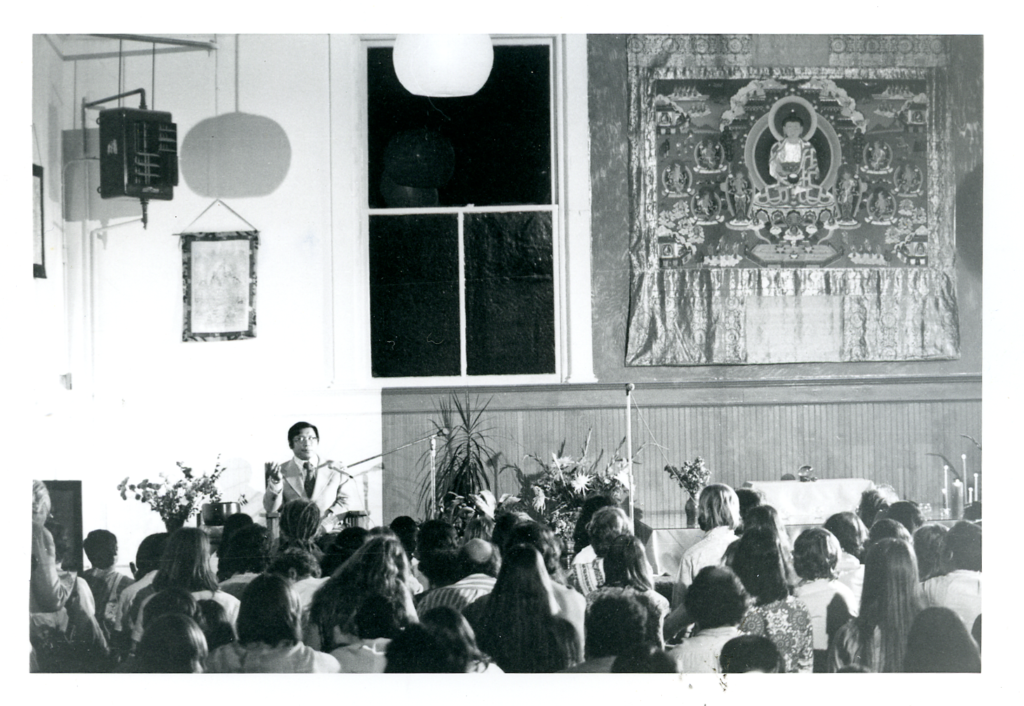
Less than a week after the first Seminary retreat concluded, Chögyam Trungpa gave another seminar on the nine yanas, this time at Karma Dzong, the meditation center in Boulder, Colorado. During the seminar, he would call on students who had been to the recent Seminary to share what they had learned. By putting students on the spot, he was beginning to train the teachers required for Buddhism to flourish in the West. No doubt, it was intimidating for those called upon to teach an advanced topic that they had only recently been introduced to.
Behind the scenes, other dedicated students were busy capturing this seminar, The Nine Yanas II, on video. These videos are some of the only ones from the original location of the Boulder meditation center at 1111 Pearl Street (now Boulder Bookstore). However, because the video quality was so poor, the tapes had been unwatchable in the decades since. But now, fifty-two years later, they have been remastered and almost all the talks are available to watch for the very first time!
“Fingerpainting”
Both of the seminars on the nine yanas (in San Francisco and Boulder) are resplendent with hidden gems—encapsulations of advanced, hard-to-pin-down vajrayana concepts. These include powerful descriptions of the unconventional “crazy wisdom” of the Kagyu lineage, vajra pride, the five buddha families, and the essence of tantra itself. In the final talk of The Nine Yanas I, Trungpa Rinpoche succinctly describes the experience of mahamudra:
“The idea of mahamudra is having developed clear perception from removing the dualistic barrier by practice of shunyata [emptiness], and an understanding of the bodhisattva’s experience and insight. Having removed the obstacles, or the barrier, of form, then one begins to see with clear perception the phenomenal world as it is. That is the mahamudra experience. It’s not that mahamudra only cuts the dualistic barriers, but it also recreates our sense of richness. One is appreciating the world once more, without preconception and without barrier.”
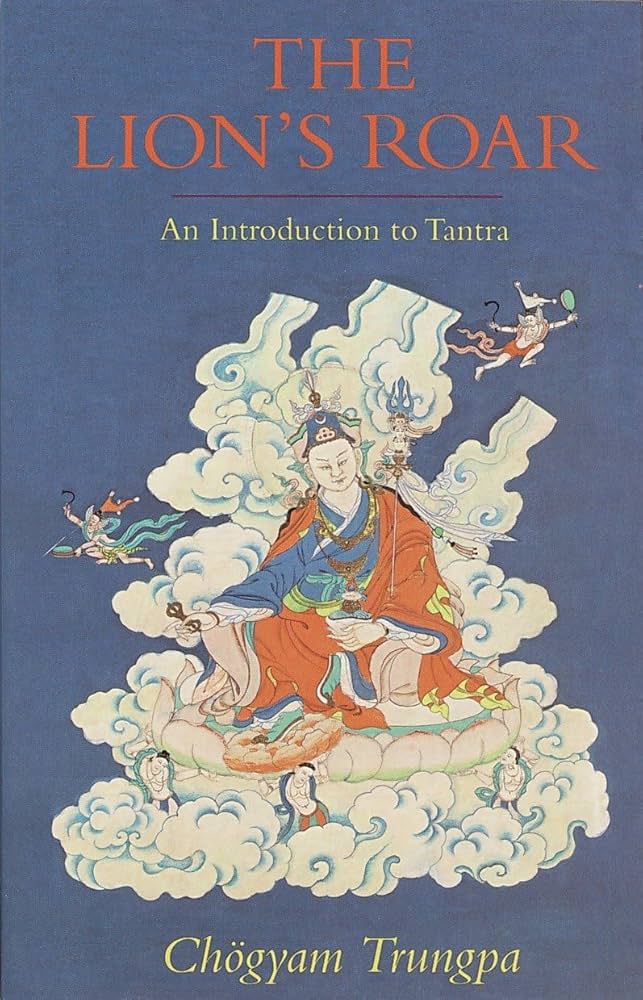
These two seminars were published in the book The Lion’s Roar: An Introduction to Tantra (Shambhala Publications, 1992). In his Editor’s Foreword, Sherab Kohn describes Chögyam Trungpa’s ability to communicate these advanced tantric concepts in a way that American students without a Tibetan Buddhist culture could understand: “He does not rely on established doctrinal formulations, but speaks from a nonconceptual, essential understanding of things and explains them in terms experiential for his audience. … He sometimes referred to his unique style of displaying the inner heart of the teaching without focusing on its outer details as ‘fingerpainting.’ This book [based on the seminars] is an excellent example of how his ‘fingerpainting’ can directly communicate insight far beyond … conventional understanding.”
A Historical Landmark
The presentation of these nine-yana teachings in 1973 represented a defining moment, not only in Chögyam Trungpa’s life’s work and his students’ spiritual trajectory, but also for Buddhism in the West, altogether. It was then that his North American students were first being equipped to embark on a genuine vajrayana path and put these teachings into practice. Beyond that particular generation, vajrayana students have continued to be guided by Trungpa Rinpoche’s approach, unique delivery of traditional doctrine, and the cultural innovations that he instigated during this period. Towards the end of the second seminar in Boulder, Trungpa Rinpoche reflected on the historical significance of this moment and his personal experience:
“I feel that we are making at least some kind of headway, creating an open situation, in order to establish one-hundred-percent Buddhism in this country. Without the vajrayana, we don’t have a head. In the hinayana, we are just discussing the foot. In the mahayana, we are purely discussing the heart. … Therefore, I feel very happy that we could actually speak in such a frank, beautiful way and that we could share my understanding—and also my loneliness of not being able to communicate this to anybody. Finally, I am able to do so. I feel very fortunate to be rediscovering a new friend who is willing to listen to such a thing. It’s an enormous, very moving situation for me, personally.”
The Nine Yanas Playlist
Listening Tip: Editor of The Lion’s Roar: An Introduction to Tantra, Sherab Kohn suggests going out of chronological order and beginning with the second seminar given in Boulder. This seminar is shorter and gives one a foundation for approaching the first San Francisco seminar. We at the Library agree and have therefore listed the seminars in that order.
The Nine Yanas II (Boulder, Colorado, Video and Audio.)
- Talk 1: The Journey
- Talk 2: Hopelessness
- Talk 3: The Preparation for Tantra (Audio only)
- Talk 4: The Basic Body (Audio only)
- Talk 5: The Crazy-Wisdom Holder and the Student
- Talk 6: Alpha Pure
- Full Seminar Playlist
The Nine Yanas I (San Francisco, California, Audio.)
- Talk 1: Suffering, Impermanence, Egolessness
- Talk 2: Competing with Our Projections
- Talk 3: The Dawn of Mysticism
- Talk 4: The Juncture between Sutra and Tantra
- Talk 5: Overcoming Moralism
- Talk 6: Introduction to Tantra
- Talk 7: The Five Buddha Families and Mahamudra
- Talk 8: Anuttarayoga
- Talk 9: Mahamudra
- Talk 10: Maha Ati
- Full Seminar Playlist
Explore Further:
- Read Sherab Kohn’s Editor’s Foreword to The Lion’s Roar: An Introduction to Tantra (Shambhala Publications, 1992), which includes rich historical context and insights on the significance of these teachings. There are also extensive footnotes with helpful information. (Each chapter is based on a talk from these seminars.)
- Watch another seminar on the tantric path, a Naropa University class from the first summer of 1974: Journey without Goal (originally titled Tantra). You can also read the book based on the seminar, Journey without Goal: The Tantric Wisdom of the Buddha (Shambhala Publications, 1981).
- Study The Profound Treasury of the Ocean of Dharma volumes, a compendium of Chogyam Trungpa’s Vajradhatu Seminary teachings. There are many study groups who do close readings and discuss these teachings. View a listing of groups here.