

An Introduction to Teachings on Arts and Aesthetics
Click here to jump to the Dharma Art Collection playlist

Welcome to the Digital Library’s comprehensive guide to “dharma art”—Chögyam Trungpa’s teachings on the relationship between artistic creativity, sensory perception, meditative experience, and everyday life. This collection includes nearly all the audio and video recordings of Trungpa Rinpoche’s talks, seminars, discussions, demonstrations, art exhibits, presentations, and meetings related to arts and aesthetics. (As new material becomes available, it will be added to the collection.) Artistic disciplines explored in these recordings run the gamut from making a cup of tea to producing a feature film, reciting spontaneous poetry to oil painting, shooting an arrow to creating a flower arrangement, designing a necklace to building a house, and so much more. And these teachings are not only for artists, nor do they apply to artistic creation alone. Quite the contrary: they are meant for everyone, and apply to all the activities of our daily lives.
As Judy Lief explains in her introduction to Trungpa Rinpoche’s book True Perception: The Path of Dharma Art, which includes material from many of these recordings:
“In the term dharma art, the word dharma comes first. Dharma means ‘norm’ or ‘truth.’ In the context of dharma art, dharma is, as Trungpa Rinpoche refers to it, ‘the state before you lay your hand on your brush, your clay, your canvas—very basic, peaceful, and cool, free from neurosis.’ Art refers to all the activities of our life, including any artistic disciplines that we practice. It refers not only to the formal practice of art, but to the artistry of life itself—our whole being. In dharma art, these two are inseparably joined.”
confidence, directness, and nonaggression
Chögyam Trungpa gave teachings on dharma art for the entirety of his time in North America, from the early 1970s until his passing in 1987. These dharma art teachings are expansive—vast and profound. At its core, dharma art can be described as any creative work that springs from an awakened state of mind, characterized by directness, unselfconsciousness, and nonaggression. And as mentioned, the principles of dharma art extend to everyday life. Any activity can provide an opportunity to relax and open our senses to the phenomenal world.
As Judy Lief explains: “Working with this material is not merely a theoretical or philosophical concern, but strikes to the heart of how we perceive our world and how we choose to live in it. At each moment we have a choice: we can act with mindlessness, tightness, and aggression or with gentleness, humor, and openness.”
These are living, breathing teachings, ever-evolving and always expanding as new generations of artists and meditators get to know this extraordinary approach to dharma, the creative process, and art in everyday life. From Trungpa Rinpoche’s early teachings on dharma art in the 1970s to a wide range of practitioners working today, interest in and practice of a dharmic approach to the arts continues to grow and develop over the decades.
“…whether we have the attitude of a student who could still become more proficient in handling his materials, or the attitude of an accomplished master, when we are actually creating a work of art there is a sense of total confidence. Our message is simply one of appreciating the nature of things as they are and expressing it without any struggle of thoughts and fears. We give up aggression, both towards ourselves, that we have to make a special effort to impress people, and towards others, that we can put something over on them. Genuine art—dharma art—is simply the activity of nonaggression.”
Chögyam Trungpa Rinpoche, from a letter written on the occasion of the Naropa Institute’s first summer program, July 1974 (also the opening chapter of True Perception, “Dharma Art—Genuine Art”).
Chögyam Trungpa, the artist
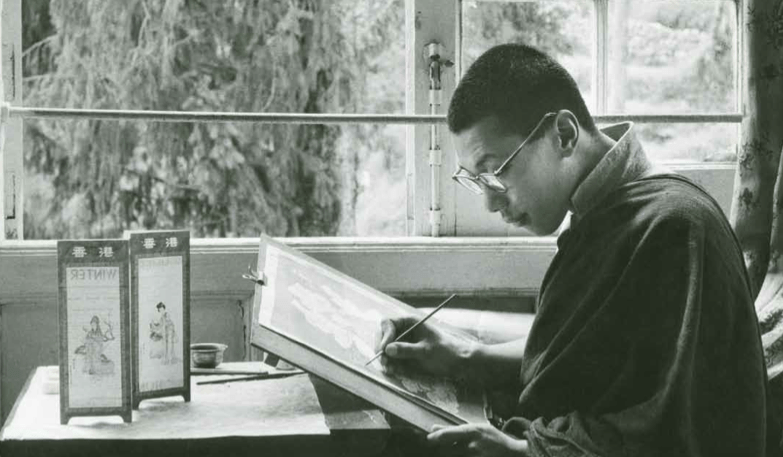
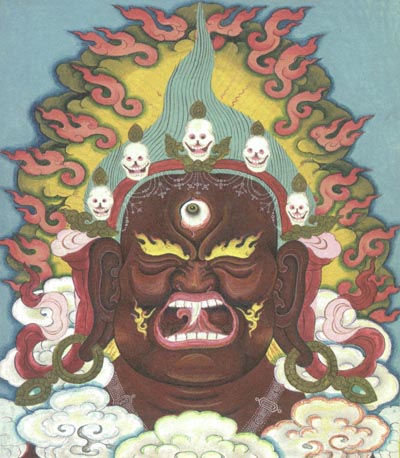
Trungpa Rinpoche was an artist in his own right with a lifelong interest and skill in a wide array of artistic practices. As a young person in Tibet, he trained in many traditional disciplines, including monastic dance, thangka painting, calligraphy, poetry, and the tradition of dohas: spontaneous songs of spiritual realization and devotion.
In England in the 1960s and then in North America in the early 70s, Trungpa Rinpoche was exposed to a totally different approach to the arts: the pomp and pageantry of traditional British customs on the one hand, and on the other hand, the individualistic, expressive art of the era, including abstract expressionism and avant-garde movements in visual arts, dance, music, poetry, and beyond. He also connected with various Japanese and Zen art forms during this period, including ikebana (flower arranging), kyudo (archery), Japanese calligraphy, chado (tea ceremony), and a Japanese approach to aesthetics that stayed with him for the rest of his life.
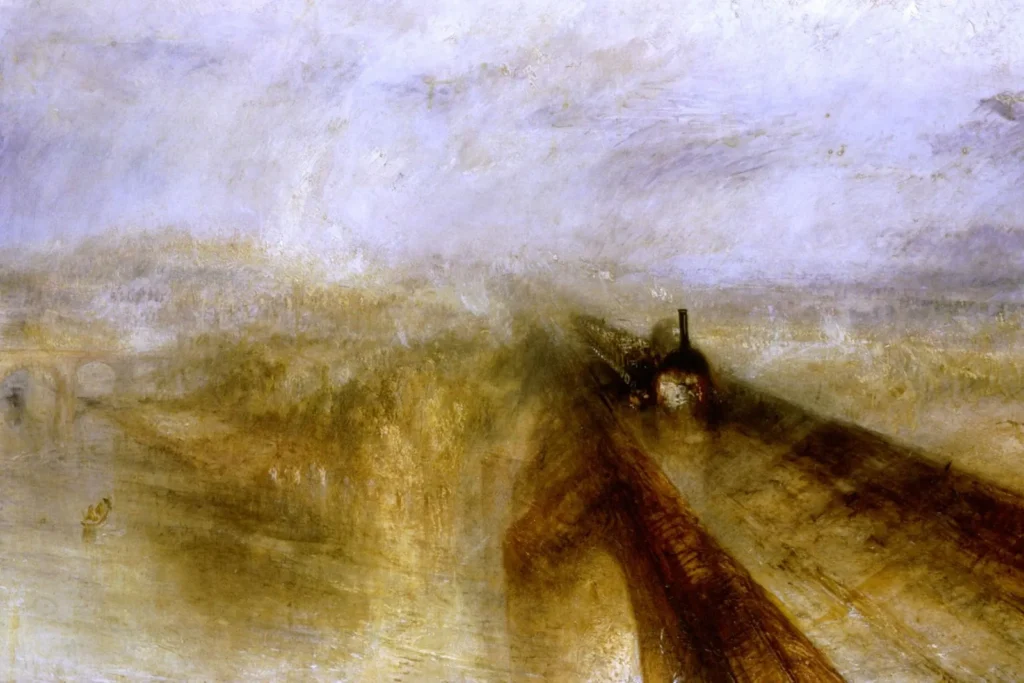
While living in the UK and studying at Oxford University, Trungpa Rinpoche pursued a number of artistic disciplines. He studied art history, oil painting, sketching, and other fine arts; he took many photographs of historic sites and other themes; he began to write poetry in the English language (as well as in Tibetan); and he explored other areas of artistic interest, including architecture, theater, and music. In terms of Western artists, Trungpa Rinpoche was particularly fond of William Turner, the 19th-century British painter, because “his vision is very open and wonderful”; and Mozart, whom Rinpoche describes in True Perception as his “favorite person in music.”
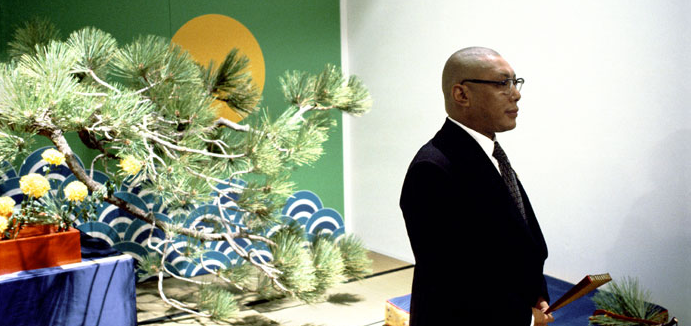
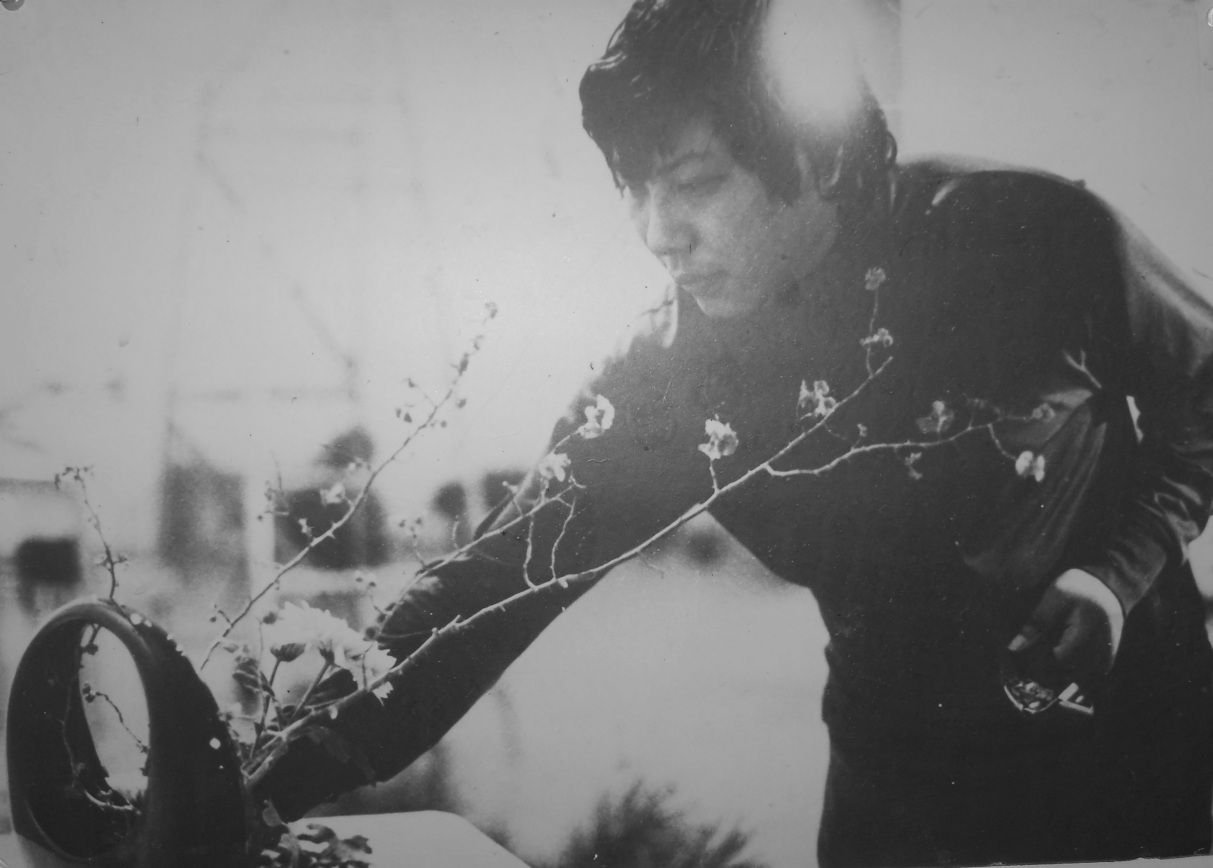
He also pursued formal study of various Japanese disciplines, including calligraphy and ikebana. He trained with ikebana master Stella Coe of the storied Sogetsu School, where the principle of “Heaven, Earth, and Human” plays an important role. Although this principle is prominent in all forms of ikebana, the Sogetsu School takes a particularly expansive approach, the influence of which can be seen in Trungpa Rinpoche’s artwork. In fact, the Heaven, Earth, and Human principle, inspired by his ikebana training, would go on to become a core tenet of Chögyam Trungpa’s dharma art teachings. In his approach to this principle, Heaven represents openness, vision, and nonthought—basic sacred space, an empty canvas. Earth is all-accommodating and represents “first thought”— the artist’s inspiration. And Human joins the two, the act of artistic expression that brings “first thought” into the world. You can hear and see Trungpa Rinpoche speak about this principle in many of the recordings in this collection, including Talk 1: State of Mind from the Visual Dharma I seminar in 1978.
Dharma Art in Many Forms
Throughout the 1970s in North America, Trungpa Rinpoche’s work as an artist continued to flourish and expand. He was talented and prolific, and although he never created artwork for the purpose of monetary gain, he often created artworks for specific occasions, including weddings of students, openings of meditation centers, readings and performances, and formal exhibitions. In the late 70s and early 80s, Rinpoche created several gallery exhibitions representing his overall dharmic approach to the arts. In particular, these exhibitions presented a dynamic combination of flower arrangements, environmental installations, calligraphy, designed spaces, and other visual forms.
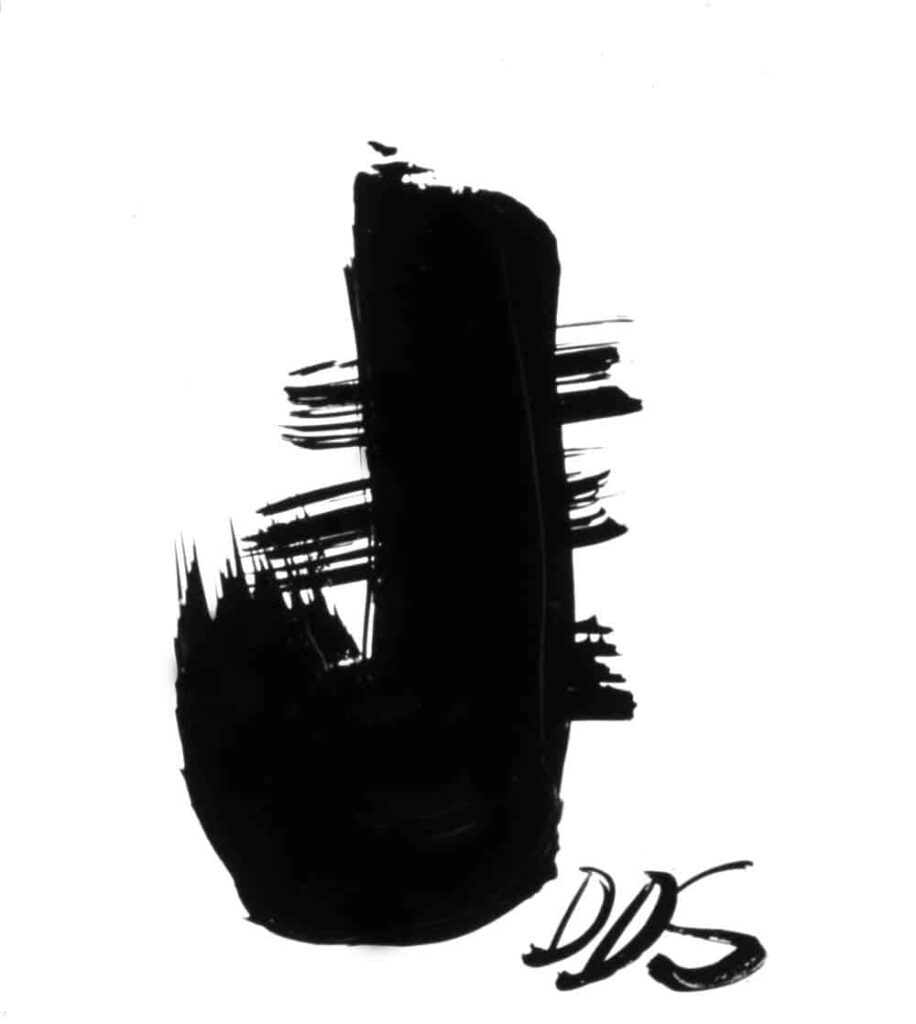
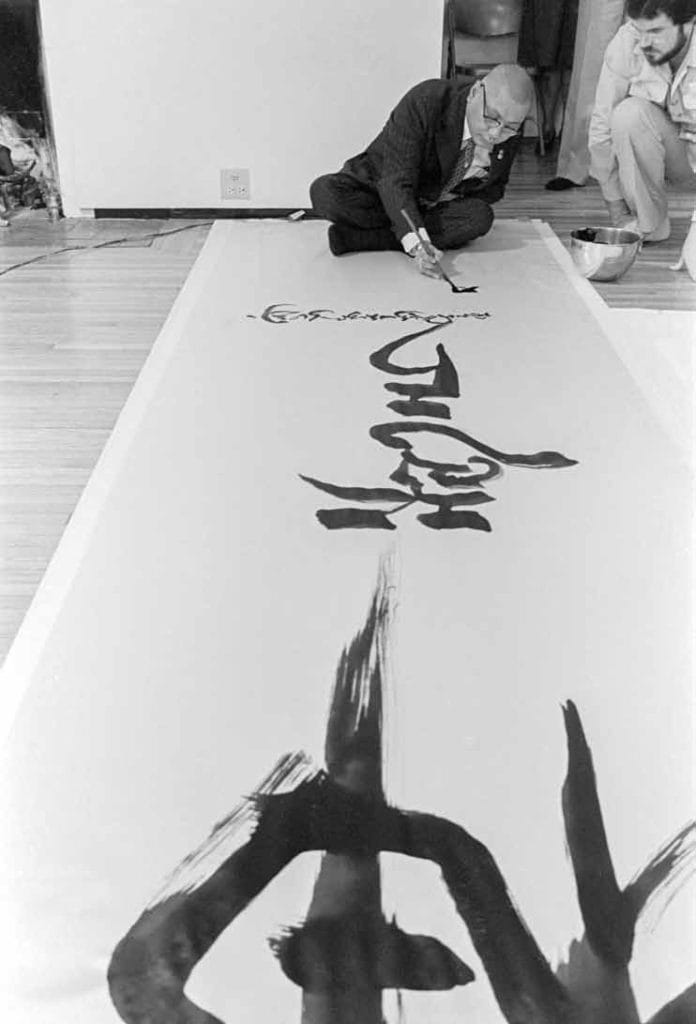
Calligraphy was central to Trungpa Rinpoche’s artistic life from an early age. His monastic training would have included traditional Tibetan approaches to the art form, and his engagement with calligraphy deepened and transformed while at Oxford when he undertook formal training in the Japanese style. He would go on to create hundreds of calligraphic works during his time in the West. Although Rinpoche principally employed his training in Japanese calligraphy to inform his style, he also incorporated other approaches and sources of inspiration, including Tibetan, Chinese, and Western methods and modes of expression. In terms of subject matter, Trungpa Rinpoche often calligraphed Tibetan words or short poems, though he also experimented with Roman letters, Chinese characters, and abstract forms. He often used calligraphy to demonstrate key dharma art principles to students during seminars and workshops, creating pieces on the spot using an overhead projector and transparencies. Flower arranging and object arranging demonstrations, as well as slide shows of his photography, were also frequently incorporated into his dharma art seminars.
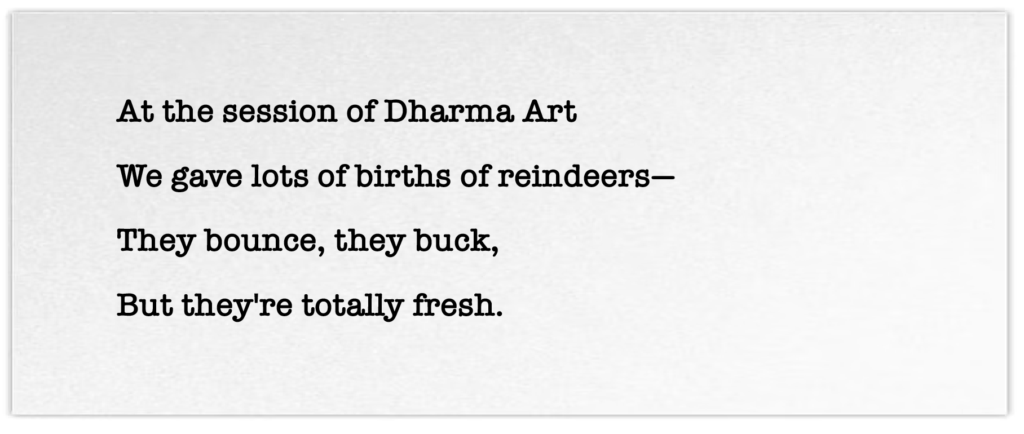
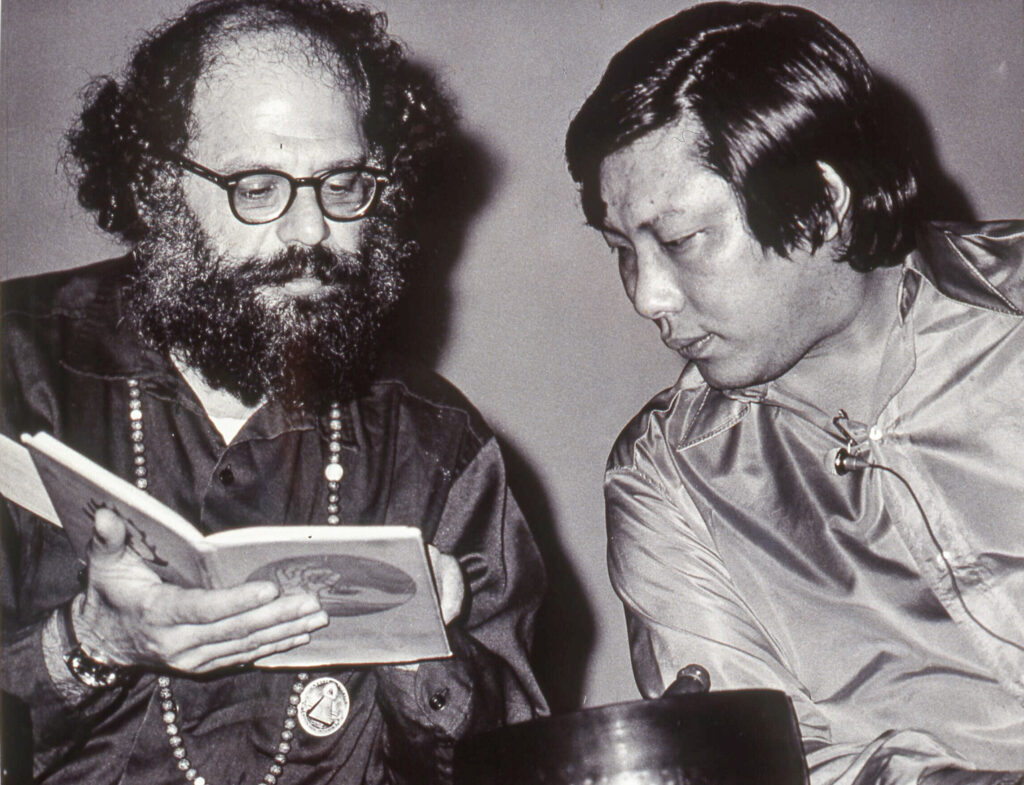
Poetry was another essential form of expression in Trungpa Rinpoche’s dharmic approach to the arts, and an ongoing part of his daily life. He composed hundreds of spontaneous spoken poems in group settings—transcribed on the spot by his students—and encouraged his students to create spontaneous poetry of their own. You can hear one such session—with spontaneous poems from Chögyam Trungpa, Allen Ginsberg, David Rome, Ken Green, and others—in “Talk 6: Art and Society,” the closing talk from the 1979 seminar Visual Dharma II. Rinpoche also organized and participated in poetry readings at the Jack Kerouac School of Disembodied Poetics (the poetics department at Naropa) and other venues where his work was read alongside that of many notable poets of the era, including Allen Ginsberg, Anne Waldman, and William Burroughs. Learn more about Jack Kerouac School of Disembodied Poetics , and a historic poetry reading at Naropa University, at this link.
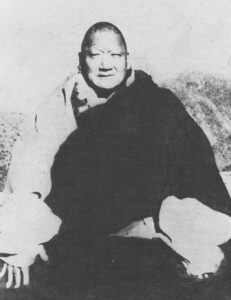
Photography was another beloved artistic medium throughout Chögyam Trungpa’s life. He took his first photograph at fifteen, in Tibet—a portrait of his root teacher Jamgon Kongtrul—and continued to work behind the camera for the rest of his life. According to The Practice of Contemplative Photography: Seeing the World with Fresh Eyes by Andy Karr and Michael Wood, Trungpa Rinpoche’s approach to photography as it developed in North America came to “vividly convey the unfabricated way he saw the world. The fresh images [he captured during this period] conveyed space, form, and energy. They were completely free from storyline and seemed to show the essence of things rather than concepts about them. The images transmitted wakefulness.” Over the years, this dharmic approach to photography was developed—first by Rinpoche and then by a number of his students—into the contemplative discipline known as Miksang (Tibetan for “good eye”), still practiced and taught today.
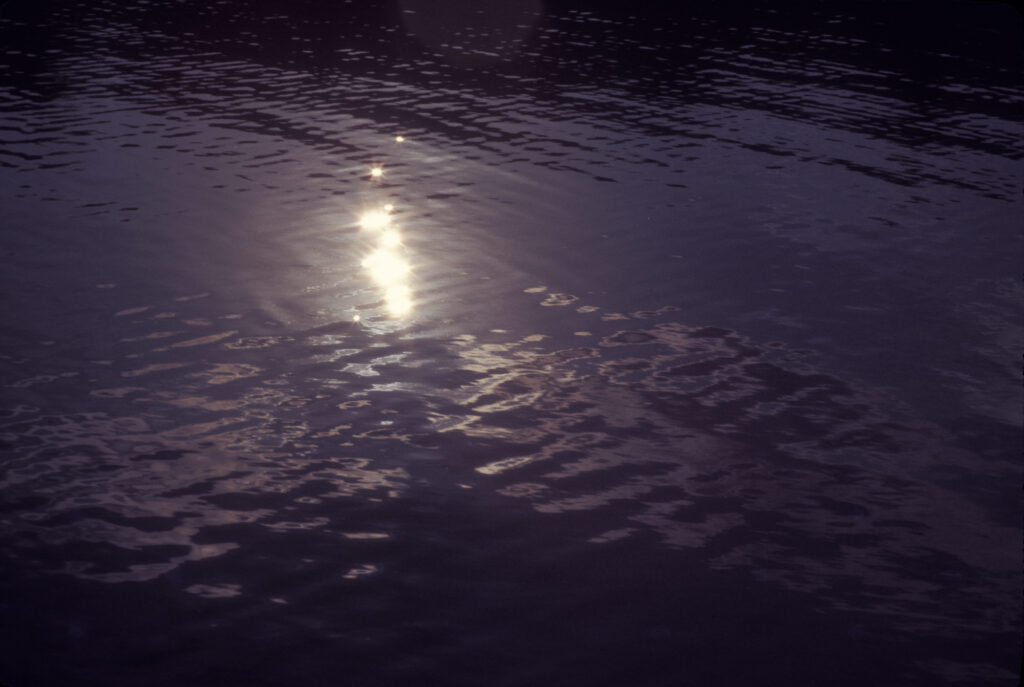
Trungpa Rinpoche also expressed artistry through design, environment, and the setup of spaces, including meditation centers and his own home. This was on prominent display in the formal gallery exhibitions he created throughout the 70s and 80s—most notably, the 1980 exhibit called Discovering Elegance at the Los Angeles Institute of Contemporary Art (described in detail below). No location or situation was left unconsidered in terms of aesthetics, artistry, perception, and the fresh expression of unconditioned mind. In addition to the art forms already described, he also designed pins, jewelry, banners, flags, logos, and meditation cushions. He designed and worked on the details of layout and presentation for magazines, brochures, posters, and other publications. He wrote songs and directed original plays (which will be featured as part of another Digital Library collection, focused on his teachings on Mudra Theatre). Trungpa Rinpoche directed and edited films, sometimes playing a role behind the camera. He created festivals and holidays, replete with all the visual and auditory trappings one might expect of such occasions. When he gave talks, the placement of objects in the space, the clothes he chose to wear, the way he lifted his cup to his lips, the way he opened and closed his fan—all of these created an environment of awakening just as much as the words he spoke.

North America: Naropa and beyond
In North America, from 1970 onward, Trungpa Rinpoche’s artistic explorations and the development of his dharma art teachings expanded dramatically. He began his very first North American teaching tour with an address to the Actors Workshop in New York City, where many avant-garde theater artists congregated. He went on to connect with artists working in Boulder, Colorado; California; New York; and many other locations. These relationships ignited a fruitful period in the development of dharma art teachings and practices. Among many other endeavors, Chögyam Trungpa developed an interest in filmmaking, theater, movement, and design that sparked the creation of numerous projects, organizations, and enterprises; he formed friendships and collaborative relationships with prominent poets and writers, including Allen Ginsberg, Anne Waldman, and Jean Claude van Itallie (who arranged the talk to the Actors Workshop); and he supported the coming together of energies and resources that became Naropa Institute (now Naropa University) in 1974.
An educational institution grounded in contemplative disciplines and inspired by Buddhist principles, Naropa immediately became a hotbed for exploring the overlap between artistic training, academic study, and meditation. It began as an Institute—first, as five- or six-week summer sessions and then as a year-round center for learning—and eventually became the first fully accredited Buddhism-inspired university in the West in 1986. Right from the outset, Naropa offered courses and seminars on Buddhism, the arts, and other contemplative topics, and its annual summer sessions drew artists from across the globe throughout the 70s and 80s. Programming featured talks and classes from Trungpa Rinpoche himself along with a remarkable gathering of teachers, students, and creative minds. It was an electrifying coming-together of many prominent artists and performers of the era, including John Cage, Meredith Monk, Jean-Claude van Itallie, Collin Walcott, William Burroughs, Gregory Corso, Robert Frank, Anne Waldman, and Diane Di Prima, to name a few. To this day, many of Trungpa Rinpoche’s students refer to the early years at Naropa and the summer sessions as a “big bang” for dharma art in terms of the formalization, expansion, and proliferation of the teachings.
Trungpa Rinpoche led a number of dharma art seminars during Naropa summer sessions. These are some of the key highlights of this collection, including the 1975 seminar Iconography of Buddhist Tantra and the seminal Visual Dharma I seminar, both captured on video.
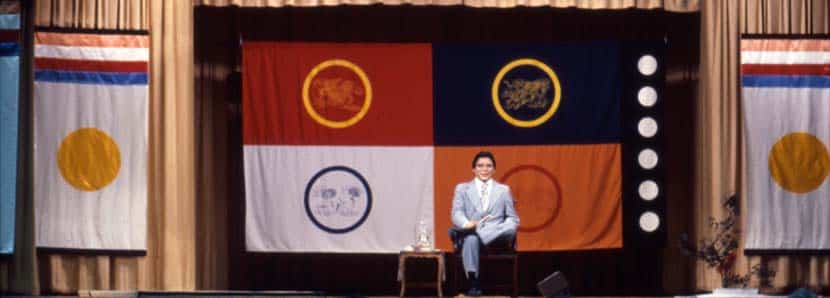
“This series of talks and demonstrations on the subject of art, by Trungpa Rinpoche, is quite remarkable. These presentations are as fresh and thought-provoking today as when I first heard them given by Rinpoche himself. Indeed, they seem even more significant now, for there is hardly a comparable voice to be found today that expresses such appreciation of and insight into the very essence of the creative spirit. According to Trungpa Rinpoche, the ground of genuine art is the irrepressible play of the innate power of non-aggression, an utterly open state of mind. It is the fresh, unabashed expression of this ground that he calls Dharma Art. Such art can appear to any of our senses; as painting and sculpture, it is termed Visual Dharma. From this same state of mind can equally appear gustatory dharma of our kitchen or sensuous dharma of brushing our hair, all as the natural adornments of our everyday life.”
Ludwik Turzanski, speaking about the Visual Dharma seminars at Naropa in a reflection for the Chronicles of Chögyam Trungpa Rinpoche. Ludwik was a Professor of Fine Arts, University of Colorado at Denver, and served as “Chief Explorer” for the Explorers of the Richness of the Phenomenal World, a group that helped gather and arrange materials from the natural world for Trungpa Rinpoche’s dharma art installations.
Collaboration, community, and Padma Jong
Collaboration and community were central to Trungpa Rinpoche’s approach to the arts. He was well-versed in the ego trips that can sometimes plague artists, what he called “artistic materialism”: becoming overly focused on one’s persona as an “artist” or dogmatic and territorial about one’s art. He encouraged his students to be expansive and inclusive in their creative processes, and to work cooperatively—bringing people together to work on the bigger view. In some instances, this spurred the formation of artists’ groups and collectives.
One such group was called the Explorers of the Richness of the Phenomenal World: students who helped to gather materials in the natural world for Trungpa Rinpoche’s installations—for example, going with him into the mountains to find the right pine branch for an exhibit. The Explorers also worked extensively with Rinpoche and others on the creation of ikebana arrangements and the positioning of furniture, art, and other items for gallery installations and in other settings. Other cooperative endeavors included a professional design company, a film production studio, and a house devoted to crafts—all formed with Trungpa Rinpoche’s input and encouragement.
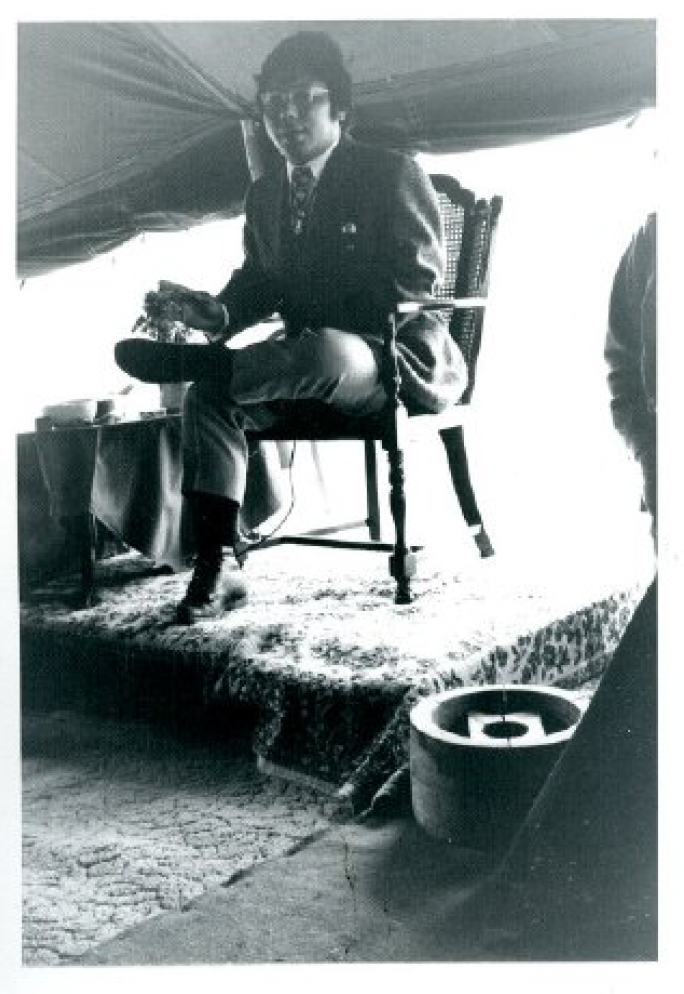
Another important example was a rural retreat center in Northern California called Padma Jong, established in early 1974 and intended to become a community-based center for the practice of contemplative arts. It only operated for a few years, but Padma Jong had a potent energy and provided essential ground for the development of the dharma art teachings that followed. Although they coincided chronologically, Padma Jong seems to have been a launchpad of sorts for the “big bang” at Naropa. In particular, in the recordings from Padma Jong we can see and hear Trungpa Rinpoche experimenting with approaches to teaching dharmic arts that would become centerpieces of his presentations at Naropa a few years later.
A good example of this is the seminar Dance of Enlightenment, another gem of the Digital Library collection not previously available to the public. Given by Trungpa Rinpoche over a six-day period at Padma Jong in early summer 1975, this series constitutes the first time he incorporated hands-on demonstrations of calligraphy, flower arranging, and object arranging into a seminar—an approach that would feature prominently in his 1978 and 1979 Visual Dharma seminars at Naropa, and many other future presentations. And the Dance of Enlightenment talks are some of the first dharma art teachings captured on film, allowing us to experience them as though we are in the room. This footage and artwork have rarely been seen, and are being made available publicly for the first time.
The original description of this seminar, which is displayed on screen at the opening of the video for “Talk 1: Appreciation and Humor,” says:
“Art can be approached as an expression of meditative discipline. The precision of mindfulness comes directly in touch with neurotic mind. Ego’s confused world is seen to be empty but at the same time vivid and alive. Against a background of no concepts, ego’s disappointment transmutes into transcendental clarity and the play of the mind becomes the dance of enlightenment. Chögyam Trungpa Rinpoche will develop this experience of art through a series of talks and demonstrations involving painting, calligraphy, Japanese flower arranging, and poetry.”
The Five Buddha Families
Trungpa Rinpoche’s dharma art teachings and his own artistic works incorporated many tantric principles. A prime example of this is the five buddha families—buddha, vajra, ratna, padma, and karma. This is a traditional framework that represents specific energies, categorizing all phenomena, including people and other beings, into groups based on their characteristics and styles of expression. Trungpa Rinpoche applied the buddha families and their attributes to many elements of the artistic process, referring to them as five styles of artistic expression or “artistic tendencies.” Along with their association with the particular styles and proclivities of the artist (and viewer) of a piece of artwork, each buddha family is also associated with a color, season, direction or location, symbol, and various qualities. For example, the buddha family is connected with spaciousness, vajra is precise, ratna exudes richness, padma is seductive, and karma is efficient.
In this approach, although the artist is not necessarily meant to interpret the qualities literally when expressing or working with the five buddha families, the scheme provides a powerful and enigmatic set of guidelines for engaging with the energy of the phenomenal world—and our own tendencies—through artistic expression.
The five buddha families pervade Trungpa Rinpoche’s teachings on art, and his own work as an artist. Some of his early dharma art presentations, such as the 1974 Art in Everyday Life I seminar from Padma Jong, include detailed descriptions of the buddha families. He also demonstrates how to lay out calligraphic works—and create flower arrangements—in connection with the energies of each buddha family in the 1975 Dance of Enlightenment seminar. We see similar descriptions and demonstrations in association with his photographs and calligraphy again at Naropa summer sessions; in particular, in the 1975 Iconography of Buddhist Tantra seminar.

Discovering Elegance: Exhibitions and Teachings
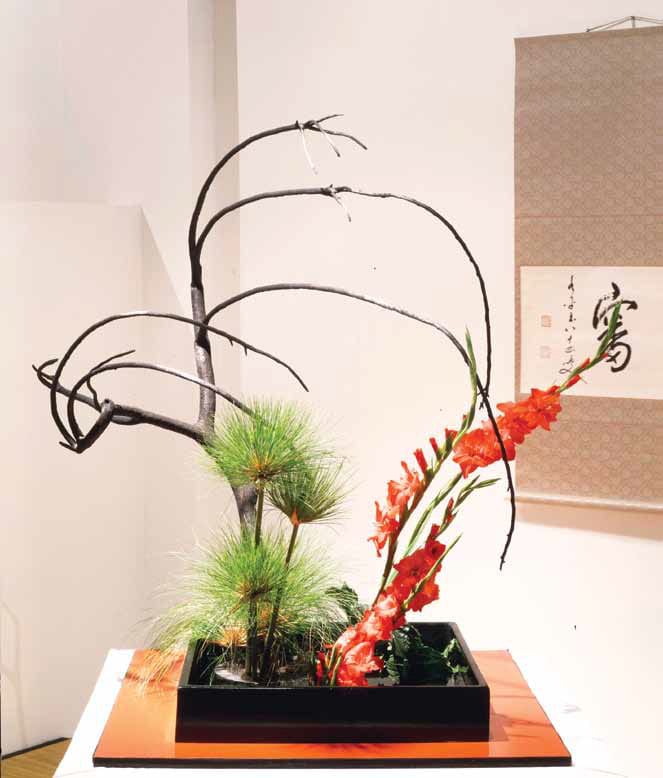
The years from 1976 to 1983 marked an incredibly active period in the proliferation of the teachings on dharma art, both in terms of Trungpa Rinpoche’s presentation of the material and his work as an artist. He organized and created numerous exhibitions during this time, often in collaboration with groups of students and other artists. A short list of his shows and installations includes:
- A flower arranging exhibit at the Emmanuel Gallery at the University of Colorado in Denver, 1978
- A presentation of a portfolio of thirteen silk-screened drawings and calligraphies called Heaven, Earth, and Man at Gritz Visual Graphics in Boulder, 1979
- Flower arrangements at the Boulder Center for the Visual Arts in 1980
- A group of works called Four Calligraphies, created in conjunction with Kyudo master Kanjuro Shibata Sensei, edition of thirty, presented in Los Angeles in 1980
- A limited-edition set of silkscreen calligraphies called Kami, edition of fifty, presented at Centre Productions in Boulder, 1980
- The 1980 exhibition Discovering Elegance at the Los Angeles Institute of Contemporary Art, described in detail below
- A 1981 solo calligraphy show at the Satori Gallery in San Francisco
- A show called Winter Beauty: An Environmental Installation at the Boulder Center for the Visual Arts in 1981
- A 1982 exhibit of environmental installations and flower arrangements (again at the Emmanuel Gallery in Denver)
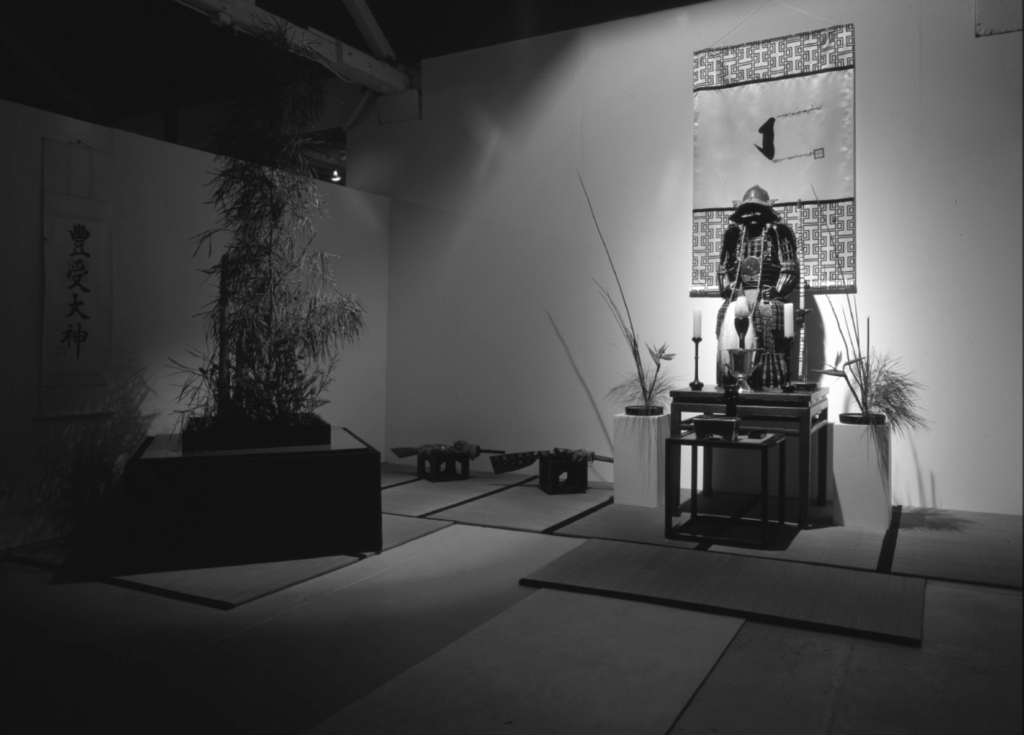
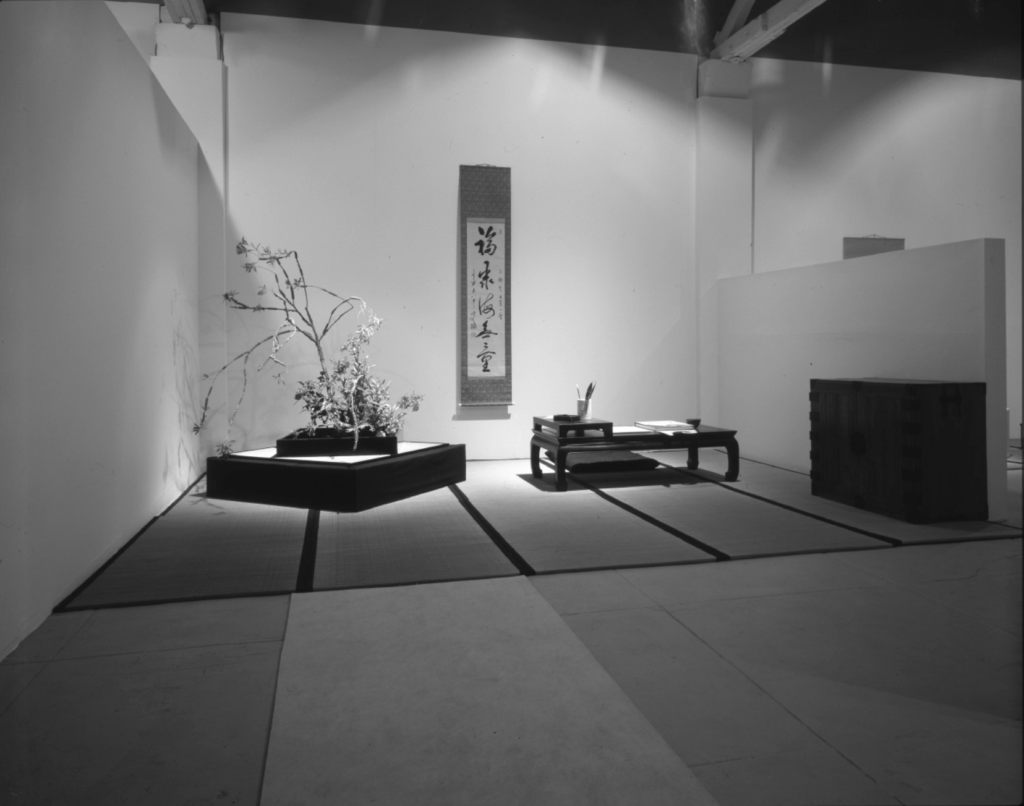
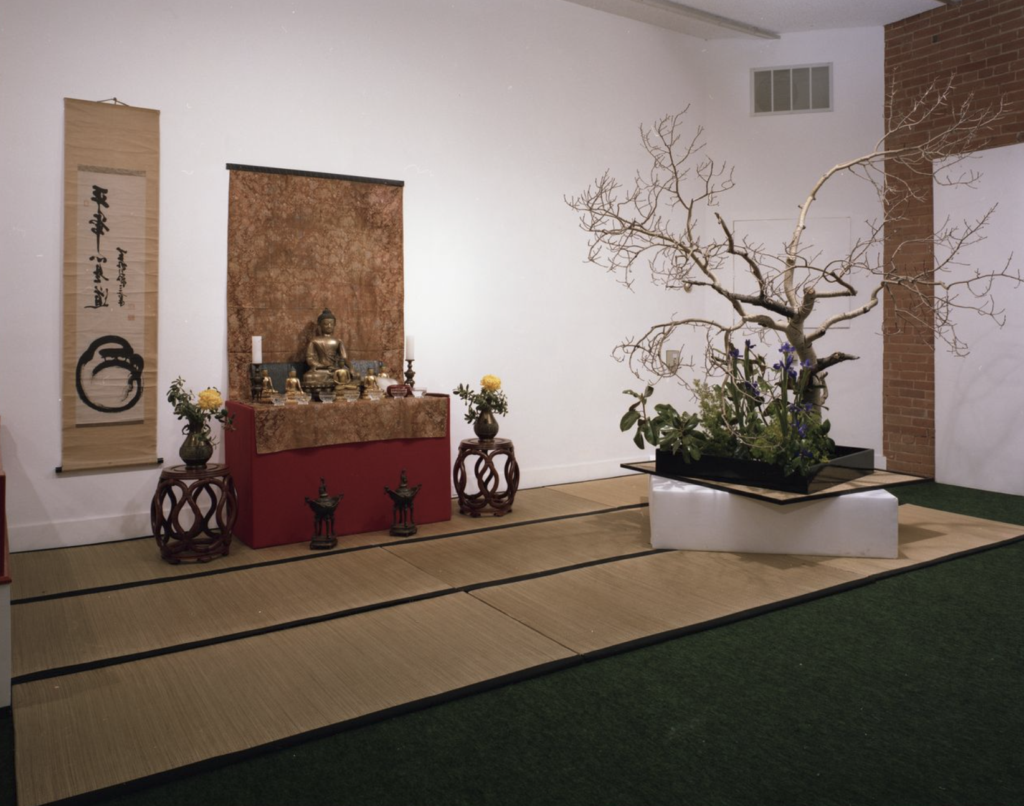
The most prominent and well-publicized exhibition of this fruitful period came in December 1980. After months of planning, Trungpa Rinpoche and a team of students worked together to create a major dharma art exhibit called Discovering Elegance at the Los Angeles Institute of Contemporary Art (LAICA), a gallery devoted to experimental work and emerging artists. The exhibit featured a series of large-scale environmental installations: a rich display of giant flower arrangements, calligraphy, designed spaces, and object arrangements organized into themed “rooms” including the Buddha Room, Tenno Room, Library, Tea Room, and Study. In an article for Shambhala Sun magazine surveying Trungpa Rinpoche’s teachings and their impact on how Buddhism is taught, Barry Boyce describes these installations as “outsized arrangements of natural and constructed objects that could bring on a blanking of the mind.”
Trungpa Rinpoche gave some fascinating media interviews in the lead-up to the show; recordings of two of them are featured in this collection. One is a sweeping interview with artist Pat Patterson about Rinpoche’s history and training as an artist, the principles of dharma art, and details about the LAICA exhibit. The other is an interview about the exhibit for Vajradhatu Sun, a community publication and the leading Buddhist newspaper of the era. In this interview, with writer (and Vajradhatu Sun editor) Rick Fields and artist and writer José Argüelles—which appeared alongside a full-page photo spread of the exhibition—Trungpa Rinpoche speaks about the experience viewers might have of the exhibit:
“I suppose at the beginning, when someone enters the environment of the exhibit, there might be some sense of confusion and awe and bewilderment. But at the same time, people begin to find that they are in a world which is very soft and elegant and workable. They begin to enjoy the beauty of the things that we have displayed here. So the starting point seems to be that there is a natural beauty and elegance that people have wished to see for a long time, and which they see manifested in this exhibit. At the same time, they could realize that they don’t have to spend too much money to create such an elegant world. They could create an elegant world without a great deal of expenditure; rather, the elegance and precision come from their upbringing of mindfulness.”
Chögyam Trungpa from an article for Vajradhatu Sun, (published in the Feb/Mar 1981 issue); the piece was edited from the original recorded interview, given on December 19, 1980.
The groundbreaking three-day exhibition was a great success: one of the best-attended installations of its kind in Los Angeles, with people lined up around the block to get in and a positive review from a top art critic at the LA Times (as described by dharma artist Steven Saitzyk in his reflections on the exhibit for Shambhala Times, 2009). The creation of the exhibit was beautifully captured in a film directed by Chögyam Trungpa himself and produced by Centre Productions, a Boulder-based production company founded by Rinpoche’s students with his encouragement.
During this period, Rinpoche also gave two seminars and a public talk by the same name, Discovering Elegance, along with other important seminars, including Dharma Art I in Boulder and Dharma Art II in San Francisco. These recordings are all included in this Dharma Art Collection as a comprehensive set for exploring Trungpa Rinpoche’s engagement with the arts in the late 70s and early 80s. This was, in many ways, a culminating point in the trajectory of Rinpoche’s presentation of dharma art, when some of his most well-known seminars and talks overlapped with many public exhibitions of his own work.

Dharma Art Collection Playlist
Early Development of the Dharma Art Teachings (1974-1975)
This group features seminars and talks given at Karmê Chöling, Padma Jong, and the Massachusetts Institute of Technology (MIT). These recordings predate Trungpa Rinpoche’s Visual Dharma seminars at Naropa and showcase the early development of his dharma art teachings.

Art in Everyday Life I (Padma Jong, CA, 1974. Audio. )
Art in Everyday Life II (Karmê Chöling, VT, 1974. Audio. )
- Talk 1: Square One
- Talk 2: Living Art
- Talk 3: Nonaggression and Outrageousness
- Full Seminar Playlist
Symbols of the Three Yanas (Karmê Chöling, VT. 1975. Audio.)
- Talk 1: Symbols of the Hinayana
- Talk 2: Symbols of the Mahayana
- Talk 3: Symbols of the Vajrayana
- Full Seminar Playlist
MIT Tibetan Art Exhibit and Mandala Celebration (Boston, MA, 1975. Audio.)
Trungpa Rinpoche gave a slideshow presentation for an exhibition of Tibetan art at the Hayden Gallery, Massachusetts Institute of Technology, Cambridge, MA. This was an early major exhibit of Tibetan art in the United States, and the plates from the exhibit, along with some of Trungpa Rinpoche’s commentary, were published in the book Visual Dharma: The Buddhist Art of Tibet. As one of the first accessibly-priced books on Tibetan Buddhist iconography available in North America, Visual Dharma served as an entry point into Tibetan art history and symbolism for an entire generation of practitioners and academics.
Dance of Enlightenment (Padma Jong, CA, 1975. Video.)
This was a seminal presentation of dharma art, captured on film. As described in the article above, Dance of Enlightenment marks the first time Trungpa Rinpoche incorporated demonstrations of calligraphy, flower arranging, and object arranging into a seminar, a technique he would go on to employ in many future seminars.
- Talk 1: Appreciation and Humor
- Talk 2: Calligraphies: Circle and Square
- Talk 3: Calligraphies: Fast and Slow
- Talk 4: Flower and Object Arranging
- Talk 5: Experiential Art
- Talk 6: Noncultural Art
- Full Seminar Playlist
The “Big Bang”: Dharma Art at Naropa (1975-1981)
These are seminars and a public talk given at Naropa Institute (now University) during the height of Trungpa Rinpoche’s dharma art activities. These also feature as part of our Naropa Collection.
Iconography of Buddhist Tantra (Naropa, 1975. Video.)
This 1975 seminar, captured on video, presents Rinpoche’s vision of perception and symbolism according to tantric principles, emphasizing continuity between ordinary life and Buddhist iconography.
- Talk 1: Symbolism in Everyday Life
- Talk 2: Obstacles to Experiencing Symbolism
- Talk 3: Relative and Absolute Symbolism
- Talk 4: The Tantric Journey
- Talk 5: Seeing Your World
- Talk 6: The Process of Perception
- Talk 7: Choiceless Magic
- Talk 8: Self-Existing Humor
- Talk 9: Lost Horizons
- Talk 10: The Path of Visual Dharma
- Full Seminar Playlist
Visual Dharma I (Naropa, 1978. Video.)
This four-talk seminar provides an overview of what dharma art is and how to approach it—the state of mind, motivation, and basic principles embodied within this approach to artistic creation and everyday life, and how dharma art connects with essential Shambhala teachings. In these high-quality color videos, Trungpa Rinpoche also gives calligraphy, flower arranging, and object arrangement demonstrations. He shows slides, including his own photographs, and has some of his poems read to the audience.
- Talk 1: State of Mind (+ Calligraphy Demonstration)
- Talk 2: Space, Sacredness and Sanity
- Talk 3: Great Eastern Sun (+ Object Arrangement and Poetry Reading)
- Talk 4: Basic Goodness (+ Flower Arrangement)
- Full Seminar Playlist
Video Clip
Visual Dharma II (Naropa, 1979. Audio.)
This seminar is part two of a two-part series, carrying forward and elaborating upon themes from the Visual Dharma I seminar given the year prior. “Talk 6: Art and Society” includes a spontaneous poetry reading that is a highlight of the collection, featuring poems from Chögyam Trungpa, Allen Ginsberg, David Rome, Ken Green, and others.
- Talk 1: Dharma and Art
- Talk 2: Creation
- Talk 3: Perception
- Talk 4: The Mandala of the Four Karmas
- This talk is available as audio only but refers heavily to drawings Trungpa Rinpoche is showing on a projector, reprinted in his book The Art of Calligraphy.
- Talk 5: Discipline (+ Calligraphy Demonstration–audio only)
- Talk 6: Art and Society (+ Spontaneous Poetry Session)
- Full Seminar Playlist
Art and Sanity (Naropa, 1981. Audio.)
- Talk 2: Mind: The Ground and Path of the Artist
- Talk 4: Art and the Present Moment: Joining Heaven and Earth [recording not available]
- Talk 6: Openness and Letting Go: The Path of Kyudo and Art
- Seminar Playlist
Public Talk
- Art and Education Public Talk (Naropa, 1979. Audio.)
Discovering Elegance and the Further Development of Dharma Art Teachings (1980-1981)
This group features seminars, talks, and interviews associated with—or given around the time of—the 1980 LAICA exhibition Discovering Elegance. It showcases a period in Trungpa Rinpoche’s dharma art teachings when he was particularly active as an exhibiting artist.
Media Interviews for the Exhibit
- Interview on Discovering Elegance with Pat Patterson (1980. Audio.)
- Vajradhatu Sun Magazine: The Art of Simplicity: Discovering Elegance (1980. Audio.)
Discover Elegance Public Talk
- Discovering Elegance (Los Angeles, 1980. Audio.)
Discovering Elegance I Seminar (Santa Monica, CA, 1980. Audio.)
- Talk 1: The Relaxation of Non-Ego
- Talk 2: The Activity of Nonaggression
- Talk 3: Art Begins at Home
- Full Seminar Playlist
Discovering Elegance II Seminar (Boulder, CO, 1981. Audio.)
Dharma Art I (Boulder, CO, 1980. Audio.)
- Talk 1: The Artistic Endeavor
- Talk 2: Basic Artful Nature
- Talk 3: Synchronizing Mind and Body
- Talk 4: Sacredness
- Talk 5: Freshness
- Full Seminar Playlist
Dharma Art II (San Francisco, 1981. Audio.)
POETRY AND POETICS collection
Poetry was a cornerstone of Trungpa Rinpoche’s dharma art teachings and his work as an artist. This set of recordings features seminars, interviews, readings, and other events related to poetry and poetics. Learn more about this topic in our Explore article on poetry and poetics at this link.
Naropa Institute Dharma Poetics Seminar (1982. Audio.)
Naropa Institute Poetry Events
- Historic Poetry Reading with Anne Waldman, Allen Ginsberg, and Chögyam Trungpa (1975. Video.)
- Poets’ Colloquium (1975. Audio.)
- Poetry Class at Karma Dzong (1975. Audio.)
- Meditation and Poetics: Class Discussion (1978. Audio.)
- Jack Kerouac Conference: Opening Address, (1982. Audio.)
- Meeting with Poetics Faculty (1982. Audio.)
Other Recordings on Poetry and Poetics
- WNET TV NYC Interview: “Free Time” with Allen Ginsberg (1972. Audio.)
- The Tibetan Buddhist Path, Talk 12: The Doha Tradition (1974. Video.)
Sources and Resources
Learn more
To learn more about Chögyam Trungpa Rinpoche, read his biography
These are some of Trungpa Rinpoche’s published books on dharma art:
- True Perception: The Path of Dharma Art (edited by Judith L. Lief). This book is an updated reissue of the 1996 book Dharma Art and features edited versions of many of the talks found in this playlist.
- The Collected Works of Chögyam Trungpa (edited by Carolyn Gimian). Volume Seven is dedicated to his teachings on art and poetics, including all of Rinpoche’s published poetry and edited versions of many of the talks in this playlist. Several other articles related to art and poetics also appear in Volumes Nine and Ten
To learn more about poetry and poetics, explore our article and playlist on the topic. Trungpa Rinpoche’s published books of poetry include Mudra; First Thought, Best Thought; and Timely Rain
To learn about various approaches to dharma art being practiced and taught today, explore this programming from Dorje Denma Ling Online (running through October 2027; recordings available)
To learn more about Miksang (contemplative photography), read this interview. You can also read the book by Andy Karr and Michael Wood referenced as one of the sources for this article
Sources
Chögyam Trungpa’s books:
True Perception: The Path of Dharma Art. Edited by and with an introduction by Judith L. Lief. Boston: Shambhala Publications, 2008.
The Collected Works of Chögyam Trungpa, Volume 7. Edited by Carolyn Rose Gimian. Boston: Shambhala Publications, 2004.
The Art of Calligraphy: Joining Heaven and Earth. Introduction by David Rome. Edited by Judith L. Lief. Boston: Shambhala Publications, 1994. [Out of print, published in Collected Works Vol. 7]
Other sources:
Boyce, Barry. “Chögyam Trungpa’s Vast Ocean of Teachings.” The Chronicles of Chögyam Trungpa Rinpoche, December 30, 2021. Originally published in Shambhala Sun, January 2012. https://www.chronicleproject.com/the-shambhala-sun-surveys-the-teachings-of-chogyam-trungpa/.
“Four Artists Reflect on CTR’s Visual Dharma Teachings.” The Chronicles of Chögyam Trungpa Rinpoche, May 5, 2012. https://www.chronicleproject.com/four-artists-reflect-on-ctrs-visual-dharma-teachings/.
Karr, Andy, and Michael Wood. The Practice of Contemplative Photography: Seeing the World with Fresh Eyes. Boston: Shambhala Publications, 2011.
“Los Angeles Institute of Contemporary Art.” Wikipedia. Accessed November 3, 2026. https://en.wikipedia.org/wiki/Los_Angeles_Institute_of_Contemporary_Art.
McLeod, Melvin, and Carolyn Rose Gimian, eds. The Best of the Vajradhatu Sun: Chögyam Trungpa Rinpoche and the Vajradhatu Community, 1978–1987. Halifax, NS: Shambhala Sun, 2001.
Saitzyk, Steven. “Rinpoche’s Gauntlet.” Shambhala Times, September 4, 2009. https://shambhalatimes.org/2009/09/04/rinpoche%e2%80%99s-gauntlet/.
Volz, Peter. “Soil’s Perfect Color.” Interview by Judy Sachs-Sullivan. Shambhala Times, October 24, 2014. https://shambhalatimes.org/2014/10/24/soils-perfect-color/.